
In today's health and care services, falls and agitation constitute one of the most significant challenges. According to WHO (2021), approximately one third of all people over 65 years of age fall each year, and in Norway, falls are the most frequent cause of injuries and hospitalizations among the elderly (FHI, 2023). For those over 80 years of age, falls account for a whopping 86.5% of all injuries.
The consequences of these events are serious, both for the individual and society as a whole: reduced quality of life, increased morbidity, and significant healthcare costs. The Directorate of Health points out that this patient group also requires frequent supervision, which is challenging at a time when health and care services are already under great pressure.
There is great potential here for new technology that can contribute to better safety, increased peace of mind, and improved quality of care.
EloCare is an innovative system for contactless and continuous patient monitoring, developed and manufactured in Norway by Elotec. This system, consisting of ceiling-mounted radar sensors (EloCare X20) and a software solution (EloCare Manager), gives healthcare professionals immediate insight into the movement, breathing rate and activity level of people in a room, without physical contact.
As a former technology coordinator in the municipality, I observed how much time was spent on nightly inspections. Many residents expressed that these inspections were disruptive, while staff were aware of the high risk of falls and unexpected incidents.
With EloCare, monitoring can be performed continuously and in a contactless manner, without violating the user's privacy. The patented radar technology detects breathing rate, activity level and movement patterns, and alerts staff to abnormal situations, such as night walking, silence, or changes in breathing before they develop into critical events.
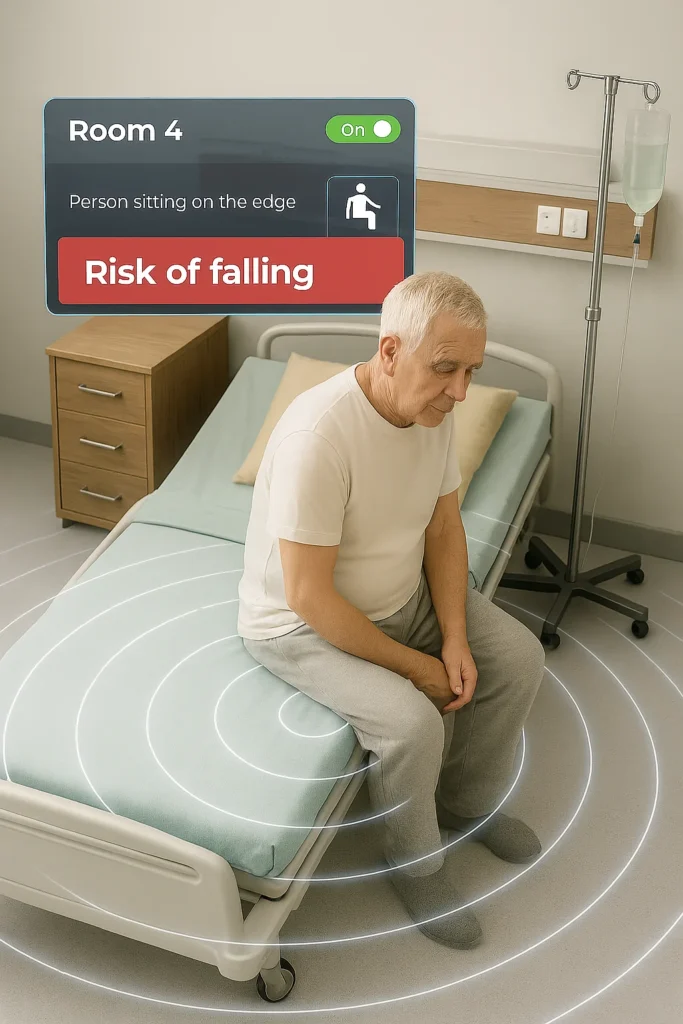
This represents a transition from reactive to proactive follow-up.
The healthcare of the future requires solutions that are flexible and adaptable to different environments. EloCare is already in use in:
As a technology coordinator, I noticed two crucial needs: The technology must be discreet, so that users feel safe and cared for, and it must be reliable to withstand challenging institutional environments over time.
This combined approach makes the system both discreet for the user and robust enough to operate stably in demanding environments such as nursing homes, psychiatric wards, and prisons, where both physical strain and hygiene requirements are significant.
Through the system's interface, threshold values can be adjusted individually and at the room level, making it possible to scale from a single home to complex institutional environments.
When monitoring is continuous and automatic, valuable time is freed up for healthcare professionals to prioritize what really matters: relationships, care, and safety. For users, it means fewer disruptions and a more dignified daily life. For the service, there is a lower risk of falls or acute incidents going undetected.
Falls and disruptions will always be part of the reality of health and care services. The question is how we meet this challenge: by maintaining resource-intensive routines, or through technology that combines safety, dignity, and operational reliability.
EloCare is in continuous development through national research projects and international collaboration. The system is already in use within the correctional and healthcare sectors, and is on its way to medical approval for clinical use.